Earlier this month I had the pleasure of speaking at WordCamp US in St. Louis. WordCamp US is the largest WordPress event in the United States, so it was quite an honor for me to be asked to present an extended workshop on SEO. As soon as I was invited to speak, I knew exactly what I wanted to talk about. I wanted to walk attendees through the identification of website personas, I wanted to help them ask the right questions about their target market and offering, and I also wanted to teach ... Read More
Search Engine Optimization Articles
SEO related blog posts, discussion and instruction covering all aspects of search engine optimization for small to mid-market companies.

Chrome to Begin Blocking Web Page Elements With Mixed Content
It seems I'm always on my SSL soapbox and it feels like most people just are not listening. Every time I do a website audit or bring on a new SEO retainer client, one of the first things I check is the health of their SSL implementation. It's one of my first steps, because about 95% of websites are doing it wrong. Every time I talk to a client about the health of their SSL implementation, they question if it really matters. My standard replies include: Google has been preaching the need ... Read More

Are You Getting What You Need Out of Your SEO Retainer?
Time and time again I talk to companies who pay for a monthly SEO retainer, but can’t actually tell me what their digital agency is doing for their money. Let me start by saying this is wrong. Actually, let me scream it from the top of a building – this is really really wrong. If you are paying a freelancer, consultant, or agency for SEO work, you should know exactly how they are spending their time and your money. Sadly, this is rarely the case and it gives the entire SEO industry a bad ... Read More

The Yin and Yang of SEO and PPC
I am pretty opinionated about SEO and PPC. I've been a longtime advocate of SEO and I've traditionally steered well away from PPC. But I'm not older and wiser and I see the writing on the wall. Search is shifting, Google is becoming a lot more greedy, and most companies cannot exist with SEO alone. Up until this last year, I would have told you PPC is "cocaine for marketers" because money is spent in hopes of a quick high and zero long-term value is derived. I view SEO as just the opposite. ... Read More
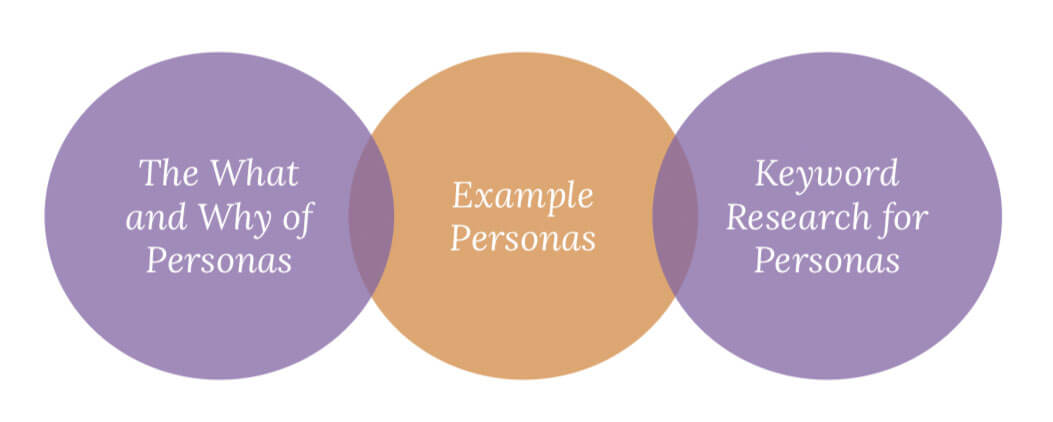
Mapping Keywords to Website Personas
Website persons can be an intimidating subject for most people. Bring keywords into the mix and the conversation can become utterly scary for some. I like to take the scariness out of website design and SEO, so I recently performed a training webinar that used Winnie the Pooh and his friends to talk through the process of mapping website personas to keywords. If you'd like to watch the full sixty-minute webinar, it is available below. If you don't have time for that much education, feel free ... Read More
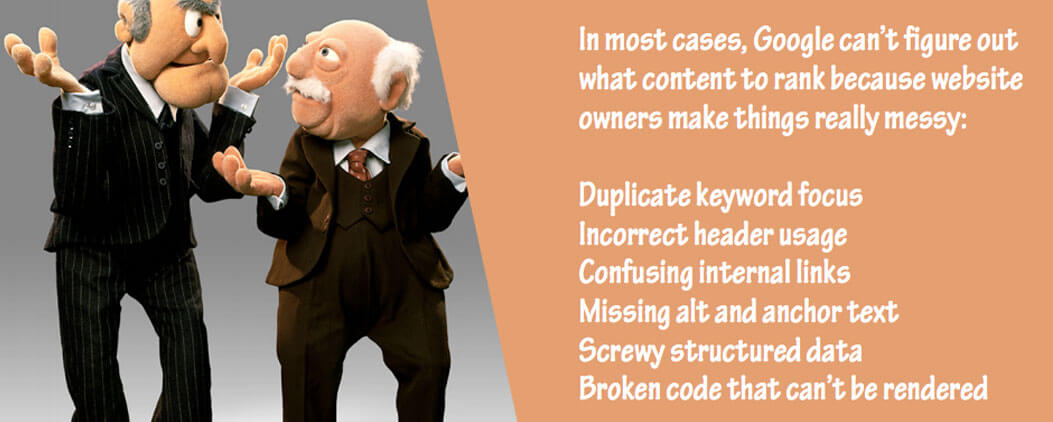
The Entrepreneur’s Guide to Today’s SEO
The landscape of SEO is constantly changing. Excelling at search engine optimization means understanding what modern SEO is and what needs to be done to remain competitive in search. Small business owners and entrepreneurs need to stay vigilant and adapt to this ever-changing SEO environment. If they fail to do so, they will be left behind in search and they'll fail to truly capture all the web has to offer. This week I held a free training webinar for the iThemes community. In this ... Read More

Google’s Mobile-first Indexing is Here
After a year and a half of testing, Google has finally started migrating websites over to mobile-first indexing. Yes, friends, it is here. But don't panic. The sky is not falling and search will go on. So what is mobile-first indexing? In Google's latest release they define it as the following: To recap, our crawling, indexing, and ranking systems have typically used the desktop version of a page's content, which may cause issues for mobile searchers when that version is vastly different ... Read More

Coming on March 20th: A Technical SEO Summit for WordPress Developers
It seems like everyone is building WordPress sites. With 30% market share, WordPress has become a powerful solution for website designers, programmers, and consultants. But are these websites being built for SEO best practices and will they actually bring in search traffic? The answer to that question is a disappointing one. In most cases, WordPress websites are being built without SEO in mind and critical elements are being left out of the design and development process. As one of my ... Read More

Continuing Education Opportunities for Your SEO Journey
SEO is a journey and not a destination. I truly believe this is the case and I try very hard to do my part in providing ongoing training opportunities for website owners, marketers, and developers. Last year I produced a lot of SEO education opportunities and I would like to do the same this year. While I don't think I can keep the same pace, I do have lots of great continuing education scheduled for 2018. I'd love you to join me for one of these great training events. Upcoming SEO ... Read More

Ranking in the Constantly Moving World of Search and Modern SEO
There are days when I feel like search engine optimization is moving faster than I can digest and I’ll never be able to stay up with modern SEO techniques and the constant changes brought forth by Google. We’ve experienced so many shifts in search that I know I’m not alone and many people feel overwhelmed as website owners and marketers. I’ve been working in internet marketing for over fifteen years. When I started with SEO it was common practice for webmasters to hide keywords in white text ... Read More

Best Option for Website SEO: WordPress, Squarespace, Wix, Weebly, or HubSpot COS?
Until recently, I hadn't thought much about website SEO and which website builder was best for supporting search engine optimization efforts and best practices. I'm a WordPress girl after all, and in my head, WordPress is the only option. But recently, my private Facebook group has received a number of questions asking about SEO and how Squarespace, Wix, and Weebly compare against WordPress. While I provided some initial thoughts on each post that arrived, I knew I needed to dig in further ... Read More

Getting Maximum Exposure with Video SEO on YouTube
I'll admit it - I avoided YouTube and video SEO for about as long as I could. This year it became overly apparent that I could no longer do so and I have to acknowledge YouTube and video for what it is - an SEO superpower. Once I moved past my avoidance, I dug into video SEO and learned as much as I could about it. You know what I discovered? It's a lot like regular SEO. Keyword research, quality content, usability, and engagement all matter and they matter a lot. Before we dig into what ... Read More

Have You Been Listening to SEObits.fm?
In June I launched a new SEO podcast called SEObits.fm and before I realized it, the summer flew by and twelve episodes have been recorded and published. In case you missed them, here is a list of what I've chatted about each week: EP 1: SEO is a Journey and Not a Destination EP 2: Successful SEO Requires a Structured Process EP 3: Quality SEO Starts With Questions EP 4: Don’t Be a Marketer, Be a Servant EP 5: Competitive Research is Good for the SEO Soul EP 6: When ... Read More

Embracing the Google Knowledge Graph
The Google Knowledge Graph was first introduced in 2012. Since then it has diversified in the types of data presented and it has greatly expanded in usage. It now dominates search results and many people don't even know what it is. The Knowledge Graph can sound really intimidating, but it really isn't that scary. It's a huge database of the people, places, and things that are popular in the world around us. But that isn't the cool part. The cool part is Google understands how those ... Read More
Announcing SEObits – A New SEO Podcast
Many years ago I had a friend suggest I launch a podcast. I dismissed it and dismissed the idea each time someone else mentioned the same idea to me. In my mind there were tons of podcasts in the WordPress industry and I just didn't want to be another one. Then over the 18 months I spent more and more time teaching and educating people on search engine optimization. I spoke at conferences, wrote eBooks, published online courses, and wrote a lot of blog posts. My world started to become more ... Read More

The Best SEO is Human-Based SEO
This last weekend I the pleasure of speaking at WordCamp Miami. While I was fortunate enough to participate on two business panels, my main presentation was a solo one focused on search engine optimization. If you'd like to review my presentation, you can download the presentation on Sideshare, as well as view the livestream video below. SlideShare Presentation Everyone From Young to Old Wants to Learn SEO The topic of SEO is always a hot one. People may say SEO is dead, but ... Read More

SEO Competitive Research Is Vital to Your Marketing Efforts
SEO competitor research is a process that reviews existing and future competitors. This is something that has been done in traditional marketing for a very long time. When you weave SEO into the competitive research mix, you will expand your existing traditional competitors with additional online competitors. You might be asking why you would have both traditional and online. That is a great question. Many times the people/websites you compete with in real life are not the same ... Read More

Register for April’s SEO Summit
SEO Summit will deliver virtual SEO training and homework exercises that will teach SEO best practices and show you how to immediately apply SEO to your website or blog. Information will be presented in an easy to understand format with actionable steps. All education materials and information will follow my proven SEO formula for driving results that are tangible and long lasting. Registration for SEO Summit Includes: 9 hours of intensive SEO training Two weeks of homework before the ... Read More

A Week of SEO Blunders
SEO blunders can happen to even the most well intentioned companies. This last week I encountered two cases of multiple SEO mistakes that happened to companies I know well. Seeing it happen to people I like is hard. Having a Come to Jesus SEO moment with people I'm professionally and emotionally invested in is even harder for me. It isn't something I enjoy, but it is a necessary part of my job. I'd like to turn this last week into a learning lesson for the readers of our blog. Don't think ... Read More
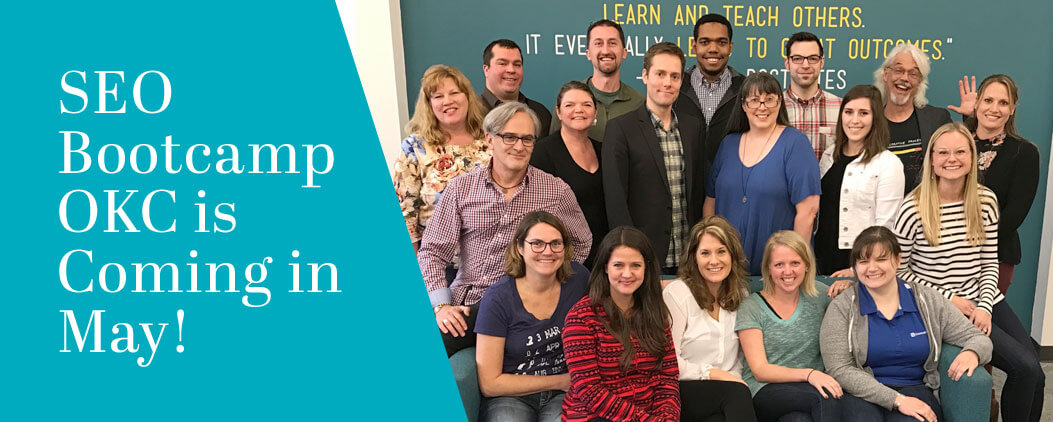
Join Me at SEO Bootcamp OKC!
This month I held my first SEO Bootcamp in Dallas, Texas. Our attendees came from all over the country and students flew in from a variety of locations stretching from California to Michigan and New York. My students were developers, marketers, and small business owners that work in a variety of industries. This diversity of experience and website focus helped provide a great mix of questions and conversations. It was so much fun! I had looked forward to getting back into onsite training, but ... Read More
- 1
- 2
- 3
- …
- 5
- Next Page »
Web Savvy Marketing
TwitterYoutubeFacebookLinkedinGoogle +